
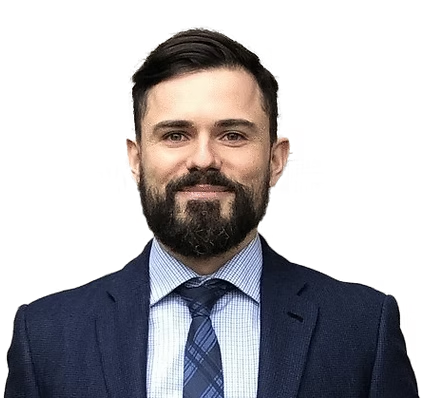
Sebastian’s Story
Physiotherapy & Performance
The Injury That Changed Everything
At 16, a skiing accident left me with multiple disc herniations, ligament sprains, and spinal instability. Over the following eight months, and for years after whenever flare-ups hit, I saw nearly every kind of health professional I could find — physiotherapists, chiropractors, Chinese medicine doctors, massage therapists, personal trainers, physicians.
Some treatments made me feel better, some made me feel worse, but on average, none of them prevented the flare-ups from coming back. The constant pain did fade after about eight months. What stuck around were specific triggers — prolonged sitting, especially on soft surfaces, was one of them. I wasn’t even aware of most of the triggers at the time.
At 18, I entered the University of Waterloo Kinesiology program living an active lifestyle — rollerblading and biking everywhere, playing soccer and basketball, lifting weights, practicing martial arts, even ballroom dancing. Anything that involved moving was something I wanted to do. But the accident hadn’t really left me. A few times a year, those same triggers would set off a flare-up that put me out of commission for weeks, or at the very least kept me from doing the things I loved.
Discovering The McGill Method
Everything changed in third year, in 2008, when I took a Low Back Disorders course taught by Dr. Stuart McGill. For the first time, someone was explaining the actual biomechanical, physiological, and psychosocial variables behind back injury and pain — not generic advice, but the real mechanics of why I was getting hurt.
Dr. McGill would often ask for volunteers to act as patients at the front of the class, and during those sessions I saw my own pain triggers, movement flaws, and positions of relief identified in real time. It was the first time my pain made sense.
I started applying these principles to my daily life, and the pain eventually disappeared. The only times it came back were when I lazily slid into old habits — poor posture, prolonged sitting, skipping warm-ups, overdoing it in the gym. My friends and family started jokingly calling me “low back obsessed.” I didn’t mind. It was working.
In the years since, I’ve snowmobiled over rough tundra for hours at a stretch, played basketball and soccer, and trained in kickboxing and Brazilian jiu-jitsu — all without back pain. I’ve also been fortunate enough to travel the world for work alongside my wife, Gosia. We now have two energetic sons and two cats who keep the rodents at bay.
From Patient To Physiotherapist
As my own back stayed pain-free, I started applying Dr. McGill’s principles professionally, working as an ergonomic consultant in welding factories, shipping and receiving operations, sewage and water maintenance facilities, ambulances, surgery rooms, and medical imaging suites.
I had also leaned on the same principles years earlier in physically demanding university jobs — window and door installation, and lawn aeration, which is a genuinely brutal workout when you do it all day for months at a time.
In 2016, after living in Aklavik, Northwest Territories for three years and South Korea for over a year, my wife and I moved to Kingston so I could attend physiotherapy school at Queen’s University.
There, I learned a great deal about manual therapy, thanks largely to Dr. Randy Booth and Graeme Leverette, alongside some outstanding clinical instructors and classmates. I also learned a great deal about cardiorespiratory physiotherapy from Diana Hokins-Rosseel — knowledge that would shape the next stage of my career more than I expected.
Building Back To Prime
I started my physiotherapy career in 2018 in cardiac and respiratory rehabilitation at Lennox and Addington County General Hospital. It was a remarkable, collaborative, and holistic approach to rehabilitation — an interdisciplinary team helping people improve their fitness, mobility, eating habits, and overall health, all at once.
It was the perfect blend of orthopaedic and cardiorespiratory physiotherapy, and honestly, I could talk for hours about that program alone. It’s also where I first grasped the real importance of nutrition and coaching in recovery, which later inspired me to pursue my Registered Orthomolecular Health Practitioner designation. Sarah Detomasi, Dr. Benjamin Chen, and Morgan Waddell provided me with very rich mentorship throughout my time there and after.
At the same time, I was running a part-time mobile physiotherapy practice, travelling to clients’ homes to treat them where they lived. Eventually, right as our first son was born, I left cardiorespiratory rehab to pursue that mobile practice full-time. I still offer that service today, alongside running Back to Prime Physiotherapy & Performance.
My Philosophy Today
I also must mention Dr. Stuart McGill had a huge impact on my ability to appreciate the difference between the true pursuit of knowledge and simply going through the motions. He was one of the few people who helped plant the seed that helped me become a nerd for critically reading scientific studies, textbooks, philosophy, psychology, etc.
There is no perfect study or method out there; verified facts can seldom explain the success of leading-edge athletes, coaches, and health professionals. More importantly, there is no prototypical patient, as every patient is unique. Clinical mastery is a dance between science, coaching, and clinical experience. It requires lifelong humility, curiosity, and wonder. It requires continual professional and personal development.
Stu is now approaching his 8th decade, is considered the top low back specialist in the world, yet I have recently heard him asking other clinicians for help.
Every principle I apply at Back to Prime — every assessment, every program, every piece of equipment in our gym — comes from the same place: a skiing injury through which I was gifted the moment a professor asked for a volunteer at the front of a classroom in 2008, and I finally understood my own back well enough to fix it for good.
That’s what I want for every patient who walks through our doors.